A Loop Through the Petrified Forest
Hadi NasiriI entered from the south side of the Petrified Forest.
That detail feels important now in a way it did not feel important then. Anthropologists often write about movement as if routes are neutral, as if direction itself carries no psychology. But every civilization has understood orientation as meaning. Ancient Persians aligned gardens with water and shadow. Nomads aligned travel with stars and wind. Pilgrims aligned the body with distance. Even burial carries geography within it. Humans are always positioning themselves against the world because somewhere beneath culture sits an unbearable suspicion: perhaps existence itself has no center.
The southern entrance did not feel like an entrance.
It felt like exposure.
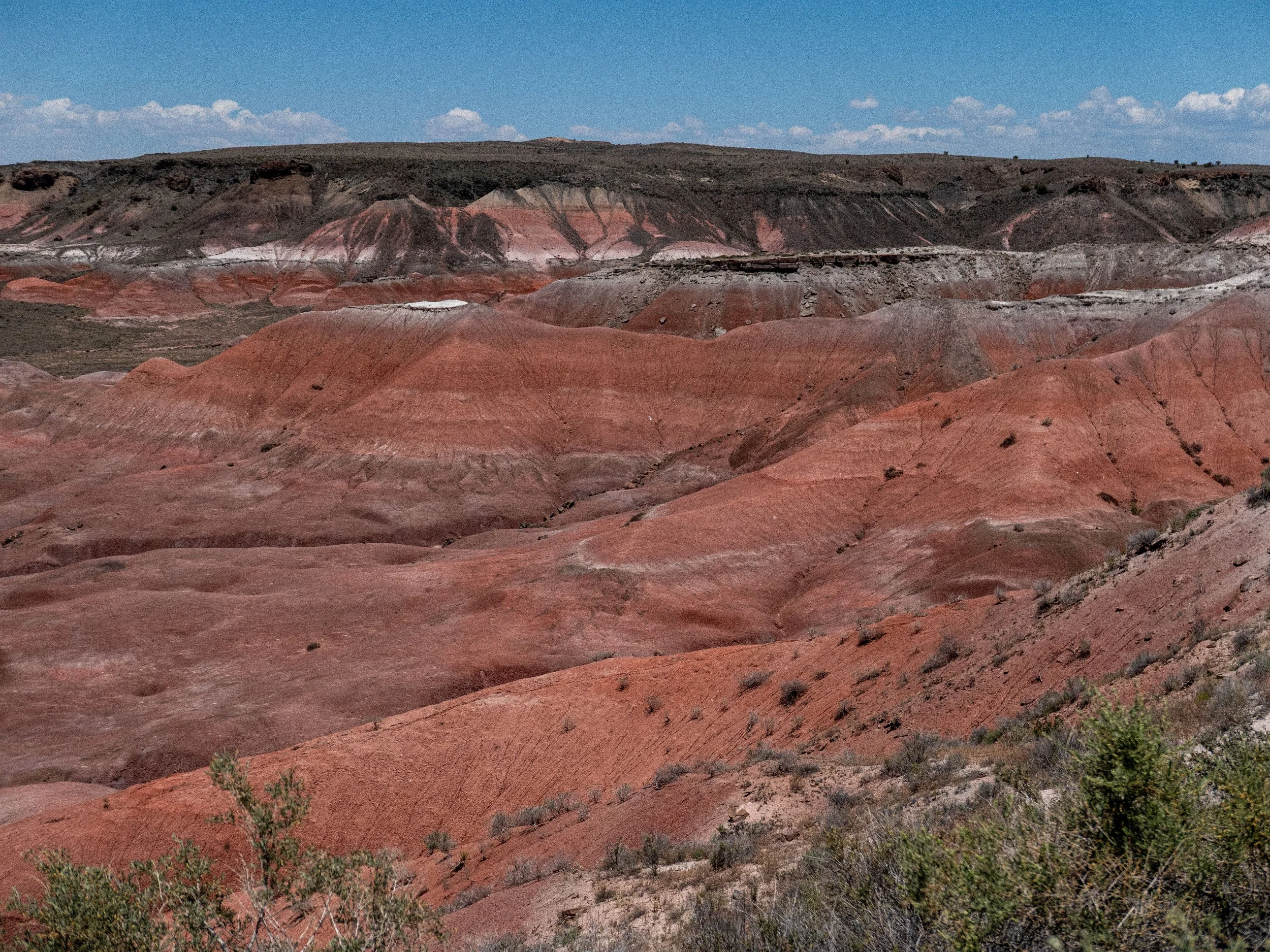
No monumental threshold. No cinematic reveal. Only heat. Wind. Dry grass. Silence stretched thin across geological time. The land looked less abandoned than emptied out by duration itself.
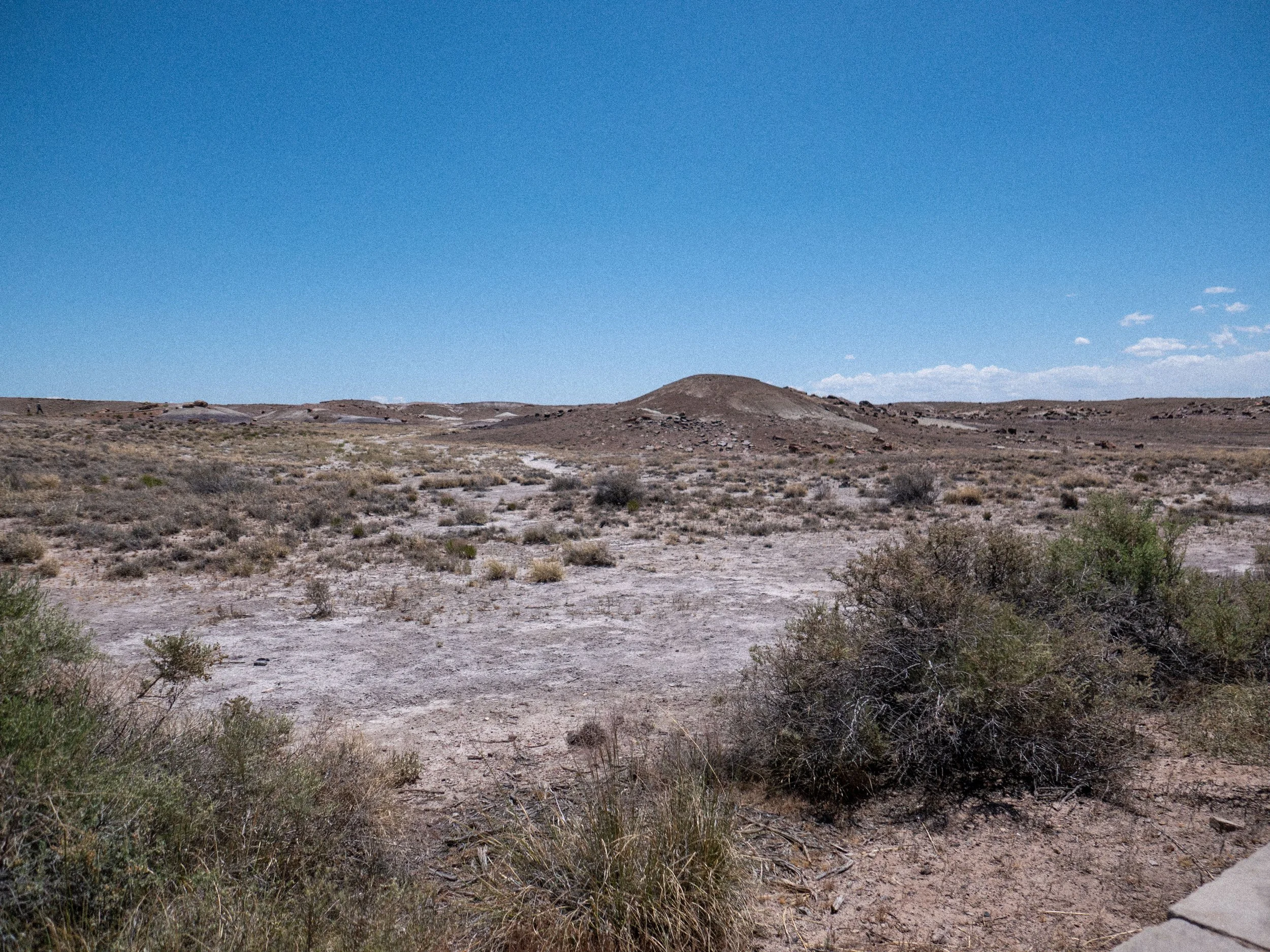
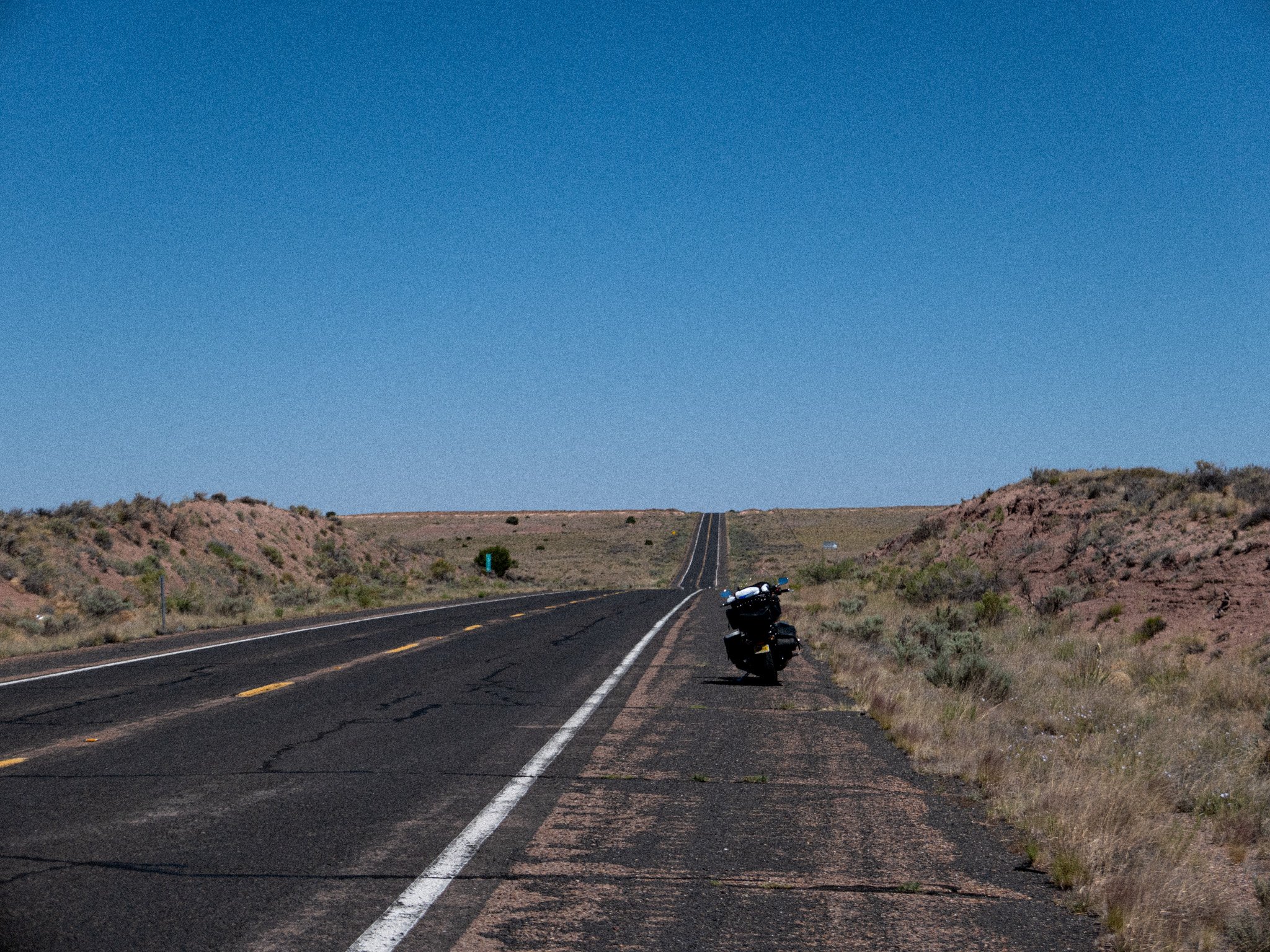
I arrived there on a motorcycle after crossing the country from New York City.
New Jersey.
Pennsylvania.
Virginia.
Tennessee.
Arkansas.
Texas.
New Mexico.
Arizona.
Days of highways and backroads. Gas stations glowing at midnight. Motel rooms with old ceiling fans and biblical paintings above beds. Men smoking outside casinos at six in the morning. Women serving coffee with the mechanical tenderness of exhaustion. Truck stops carrying the smell of diesel, burnt sugar, loneliness, and overheated brakes.
America revealed itself slowly through repetition.
Not through media.
Not through politics.
Through infrastructure.
A motorcycle changes the anthropology of movement.
Inside a car, the world remains separated from the body by glass. Air-conditioned. Filtered. Curated. But on a motorcycle, geography enters your nervous system directly. Heat becomes physical pressure. Wind rewrites thought. Rain becomes existential. Distance becomes muscular.
By Arizona, my body no longer felt separate from the road.
My fractured left arm hurt every time I pulled the clutch. Desert wind dried sweat into salt beneath my jacket. Gasoline stayed trapped in my gloves long after refueling. My lower back ached from hours of vibration. Sometimes after removing my helmet at rest stops, silence arrived so suddenly it felt violent.
I was not visiting the landscape anymore.
I was being processed by it.
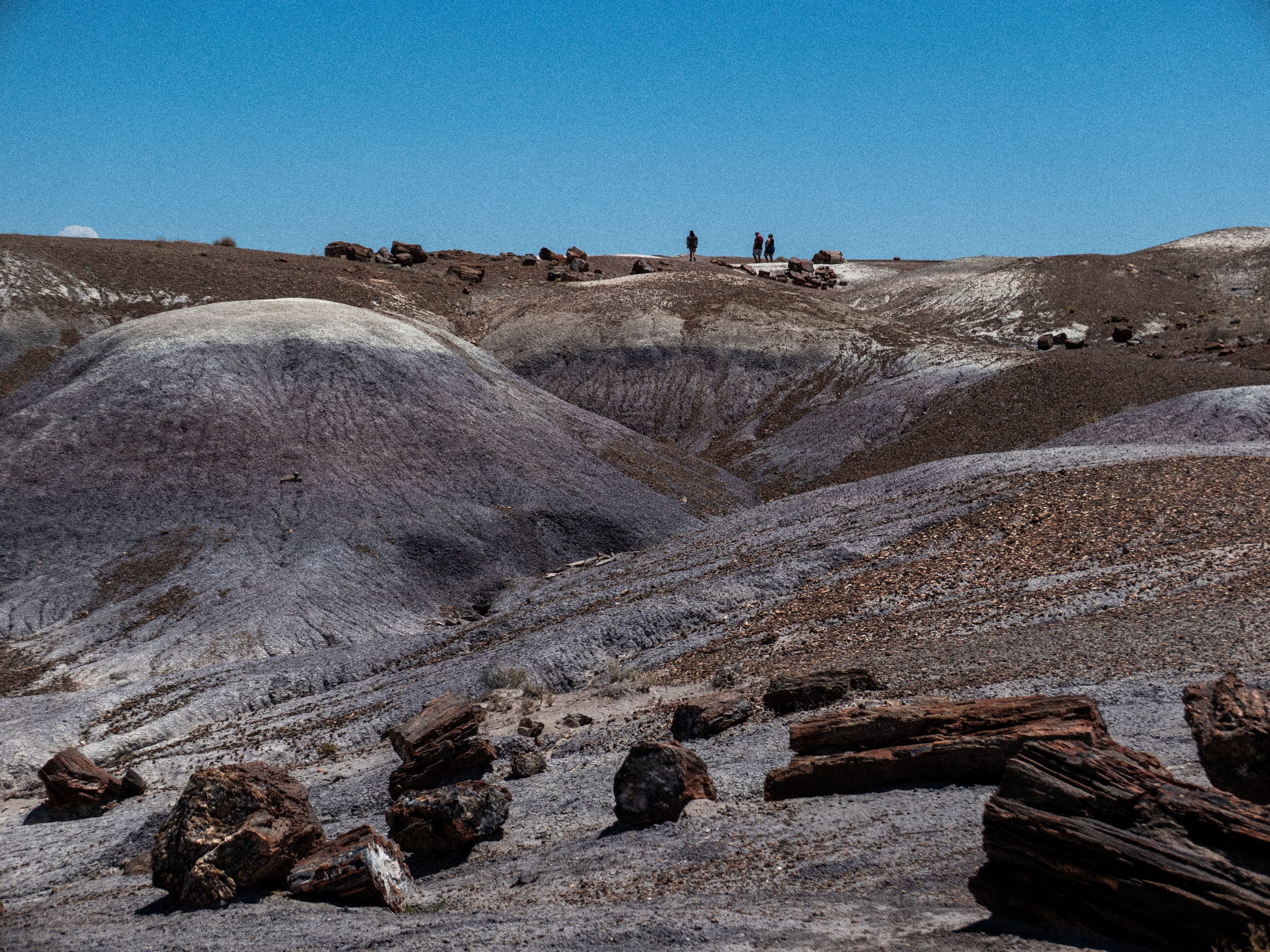
The first thing that unsettled me in the Petrified Forest was not the scale of the desert but the trees themselves.
Or rather, what remained of them.
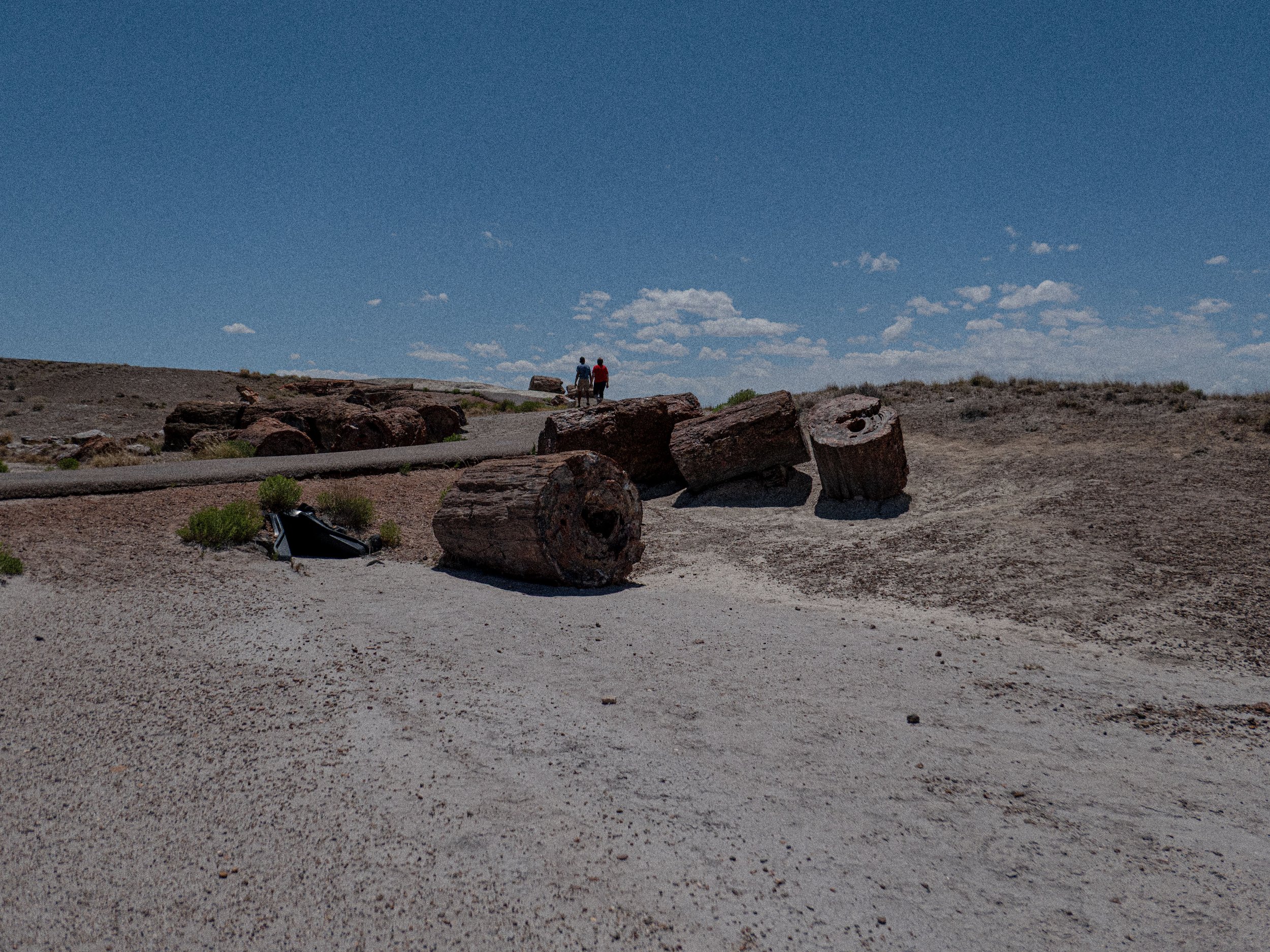
Massive trunks scattered across the land like interrupted memories. Some split into sections like vertebrae. Others resting alone on hills as if separated from whatever world once held them together.
Two hundred million years ago this region was not desert. It was wet. Subtropical. Dense with rivers and forests. Then came floodplains, volcanic ash, burial beneath sediment, mineral seepage, pressure, unimaginable spans of time. Slowly the organic material disappeared molecule by molecule while silica entered in its place.
Quartz replaced flesh.
Stone replaced wood.
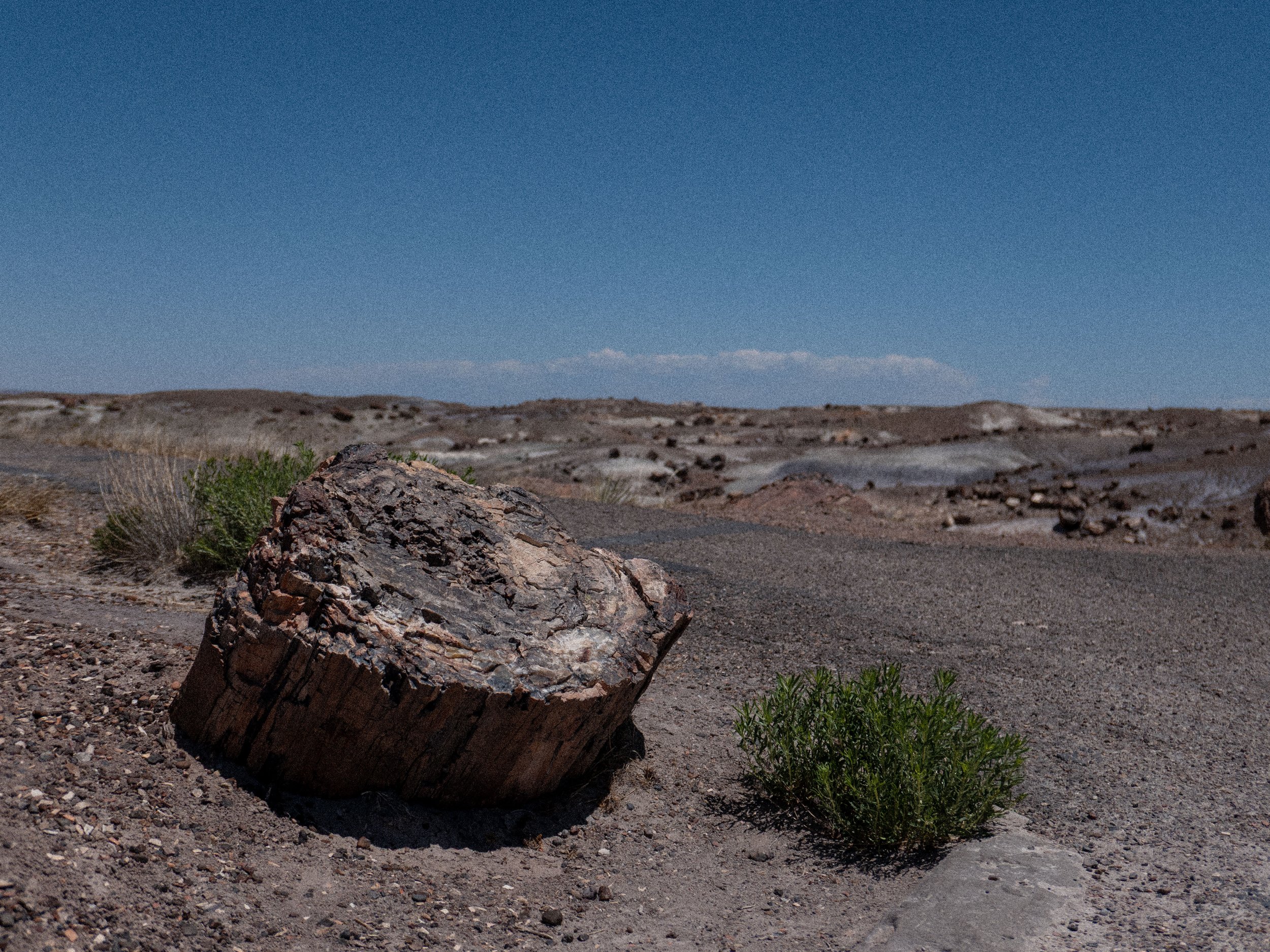
The tree remained visible while no longer being a tree.
The sentence moved quietly beneath my thoughts like underground water beneath a Persian desert.
The tree remained visible while no longer being a tree.
What a terrifyingly human condition.
I walked among the fossilized trunks asking questions I could not answer.
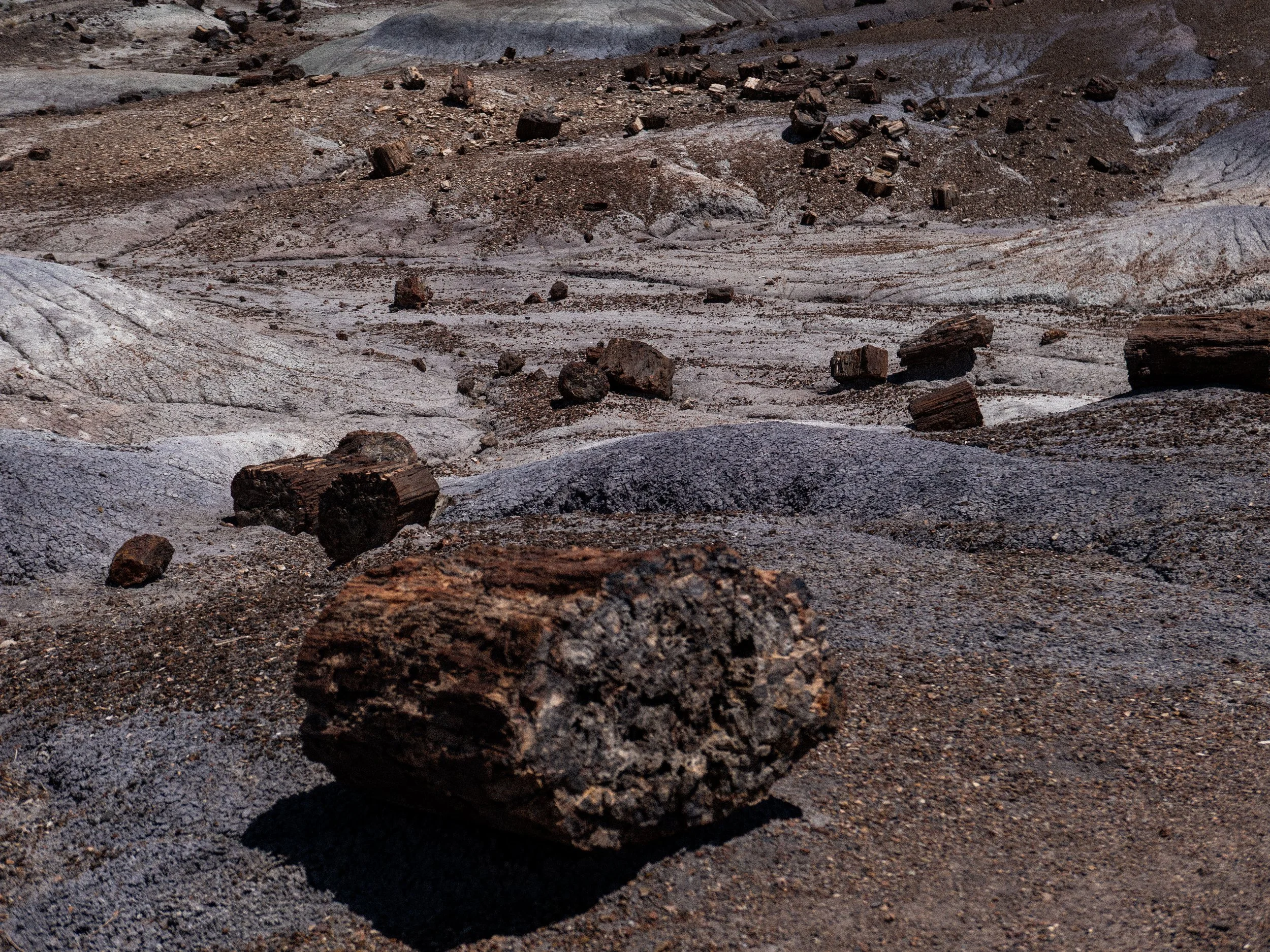
At what point does something stop being itself?
How much replacement can occur before identity disappears completely?
Can memory survive structural transformation?
Can civilizations petrify?
Can people?
The desert answered nothing.
Only wind.
Only heat.
Only duration.
Nearby, tourists moved quietly along the paths. Even children seemed subdued there. Nobody spoke loudly. Geological time has a way of humiliating human certainty.
And beneath all of this sat another layer of silence: indigenous land.
Not empty land.
Never empty.
Long before tourists, highways, park maps, and interstate exits, this terrain already belonged to systems of meaning older than modern America itself. Indigenous relationships to desert were never based on domination but continuity. Survival not through conquest of landscape but through attunement to it.
Modern tourism turns ancient land into scenery. We consume geological time through overlooks and parking lots. We photograph sacred duration and continue driving west.
I was implicated in that too.
An immigrant from another empire, crossing occupied land on a machine fueled by extraction, searching for meaning inside a national park gift shop civilization.
Anthropology becomes uncomfortable when the observer realizes he is also part of the structure being observed.
The first passage through the park overwhelmed me with questions.
The second passage changed the questions themselves.
At the end of the road near Interstate 40, trucks thundered westward toward California. Engines roared. Motion resumed. I could have continued directly to Flagstaff.
Instead, I turned around.
I rode back through the Petrified Forest the same way I came.
A loop.
Later, my friend Linda told me that loops matter psychologically. She was right, though I think the matter goes deeper than psychology.
Modern society worships linearity.
Forward.
Growth.
Progress.
Expansion.
Acceleration.
But many ancient civilizations understood wisdom through return.
Seasonal time.
Pilgrimage.
Ritual.
Circular cosmology.
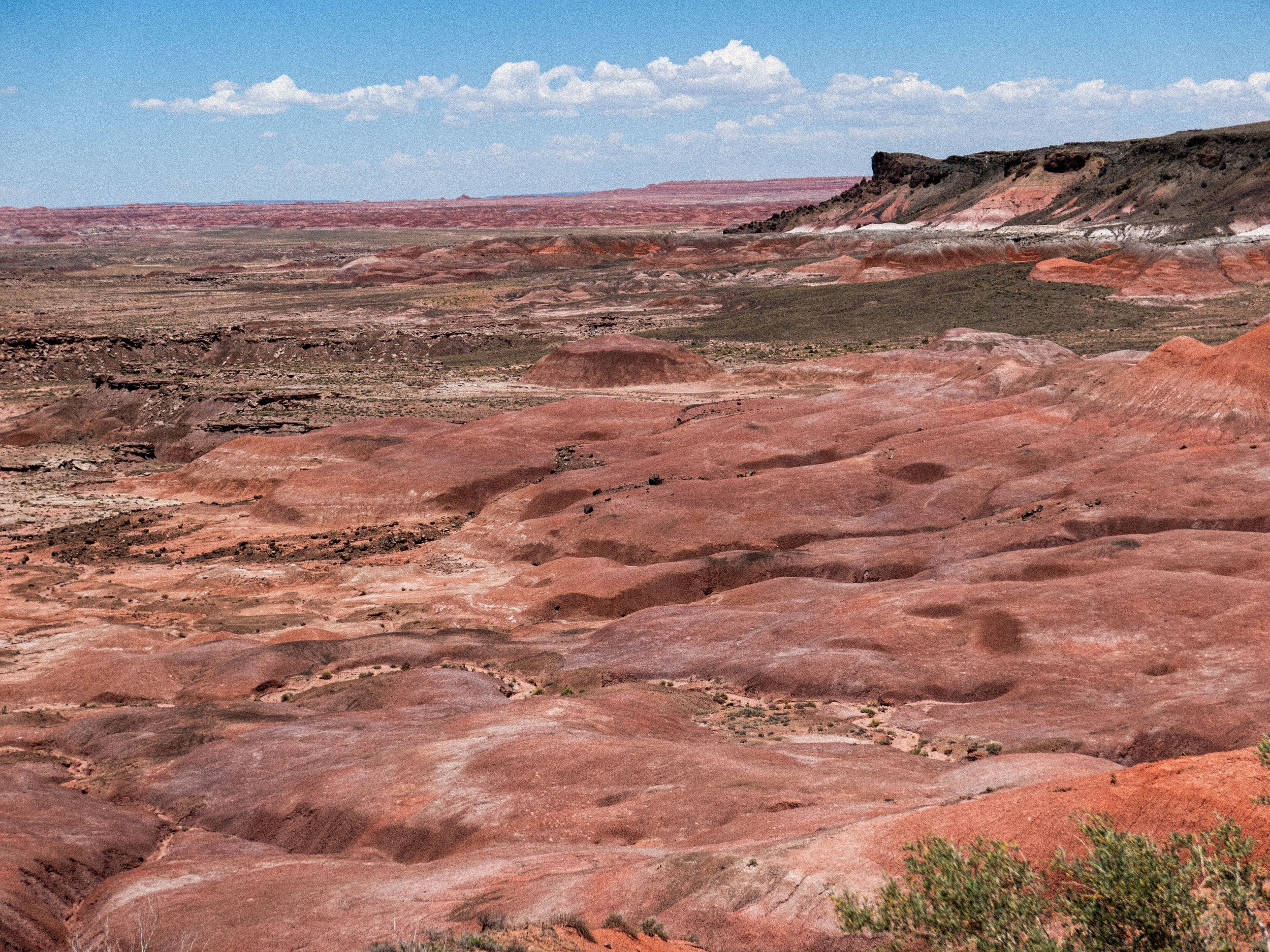
Persian culture especially understands return. The caravan leaves and returns altered. The Sufi departs from the self only to encounter the self again in another form. Even ancient Qanat systems beneath the deserts of Iran carried hidden water through underground circulation. Survival itself depended not on spectacle but continuity beneath the surface.
The first ride through the Petrified Forest felt observational.
The second felt confessional.
On the return journey I began recognizing things I had missed before.
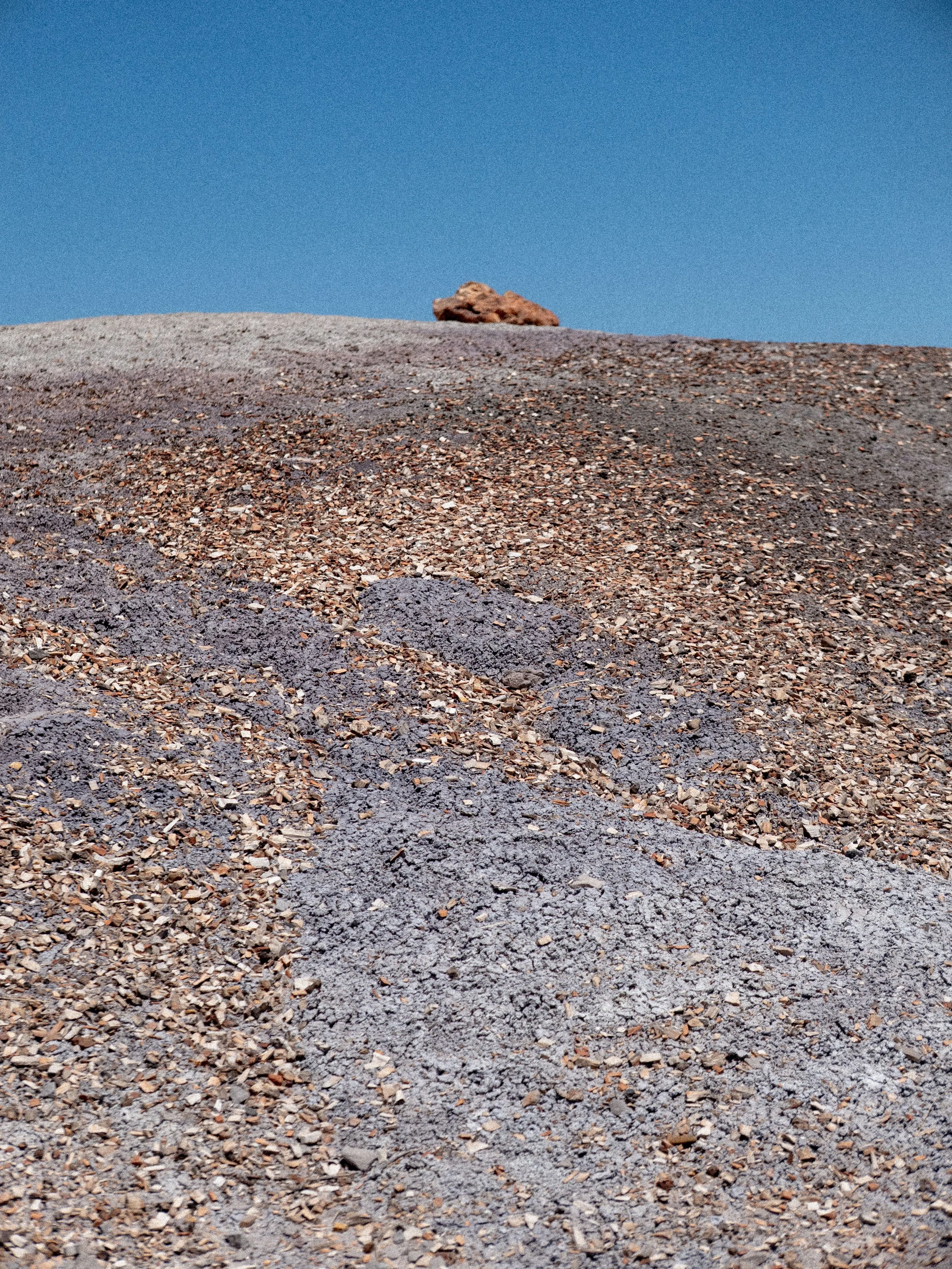
The same hills appeared softer.
The same wind sounded slower.
The same fossilized trunks no longer looked tragic.
They looked patient.
And suddenly I realized I was no longer only thinking about ancient trees.
I was thinking about human beings.
About the strange ways societies become petrified while remaining operational.
Not dead.
Not collapsed.
Something more disturbing.
Preserved.
Across America I kept encountering structures that still functioned externally while internally something essential had hardened long ago.
Abandoned strip malls still carrying faded optimism from another decade.
Casino towns glowing beneath economic despair.
Churches beside opioid clinics.
Gigantic warehouses where human movement becomes algorithmic choreography.
Political billboards replacing conversation.
Motel breakfast rooms where strangers stare silently into microwaved eggs beneath television news.
People continue moving through systems long after belief has disappeared from them.
The body survives.
Routine survives.
Language survives.
But internally something mineralizes.
The tree remained visible while no longer being a tree.
That is what frightened me most about the Petrified Forest.
Not extinction.
Preservation.
The trees survived by ceasing to live. Civilizations survive through museums. Institutions survive through bureaucracy. Relationships survive through routine. Immigrants survive through adaptation. People survive through emotional hardening.
But at what cost?
That question followed me like heat off asphalt.
As an immigrant, the landscape entered me differently. Migration itself is a kind of geological pressure. You leave one structure and another slowly begins replacing parts of you.
Language changes.
Desire changes.
Rhythm changes.
Memory changes texture.
Years later, you remain visibly yourself while internally entire systems have transformed.
Again:
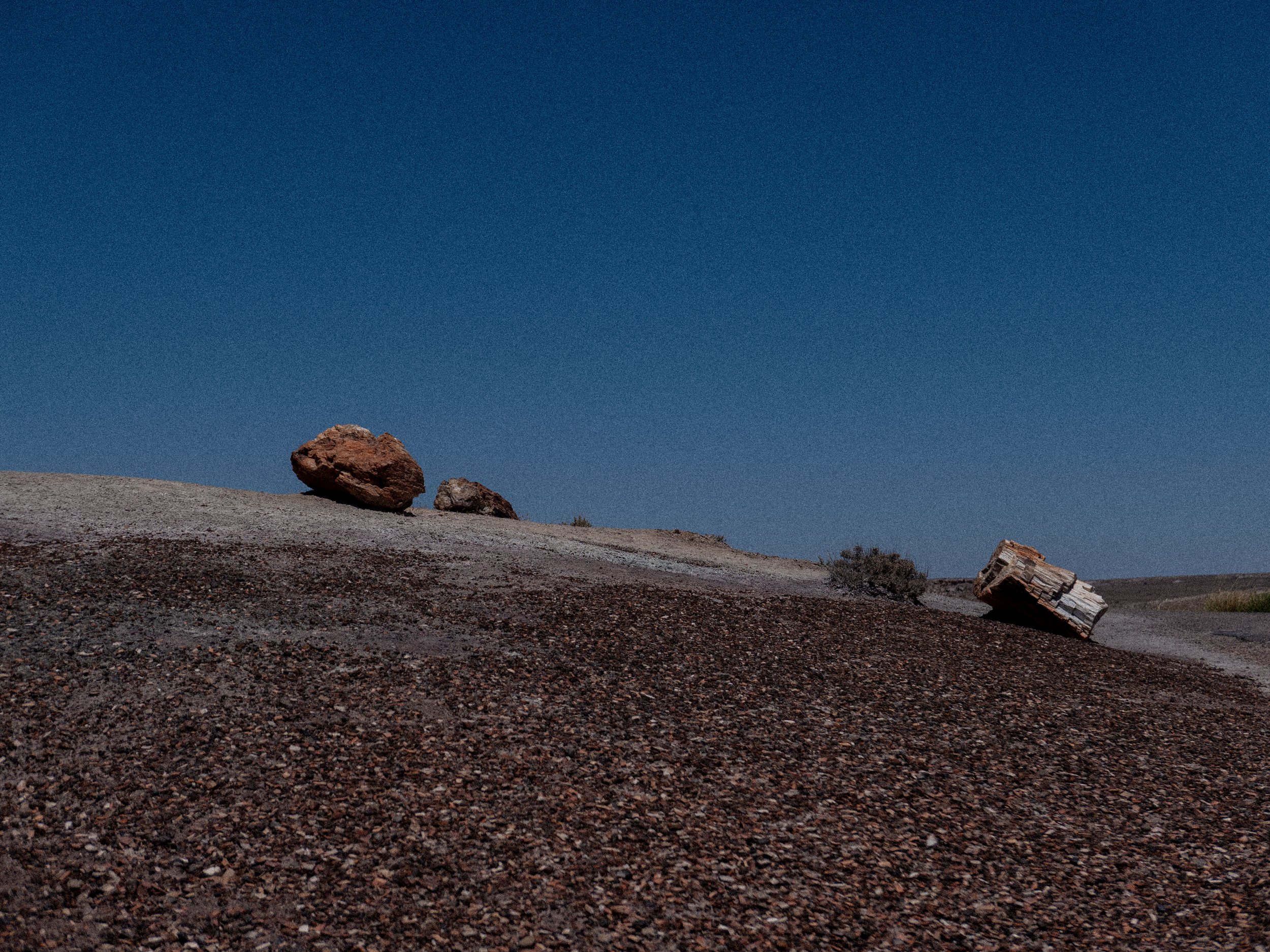
The tree remained visible while no longer being a tree.
Perhaps immigrants understand petrification intimately because we live inside gradual replacement.
And yet the desert also taught me something else.
Petrification is never complete.
Not entirely.
I saw too much human tenderness on this road trip to believe complete hardening is possible.
The woman in Arkansas helping after my accident.
The old Texan asking about my motorcycle as if speaking about a horse.
The exhausted cashier in New Mexico warning travelers about incoming weather.
The Navajo artisan silently arranging jewelry beneath unbearable sun.
Two strangers sharing cigarettes outside a motel while discussing medical bills.
Small acts of resistance against structural hardening.
Perhaps civilization survives precisely there.
Not in monuments.
Not in empires.
Not in nationalism.
In gestures that refuse mineralization.
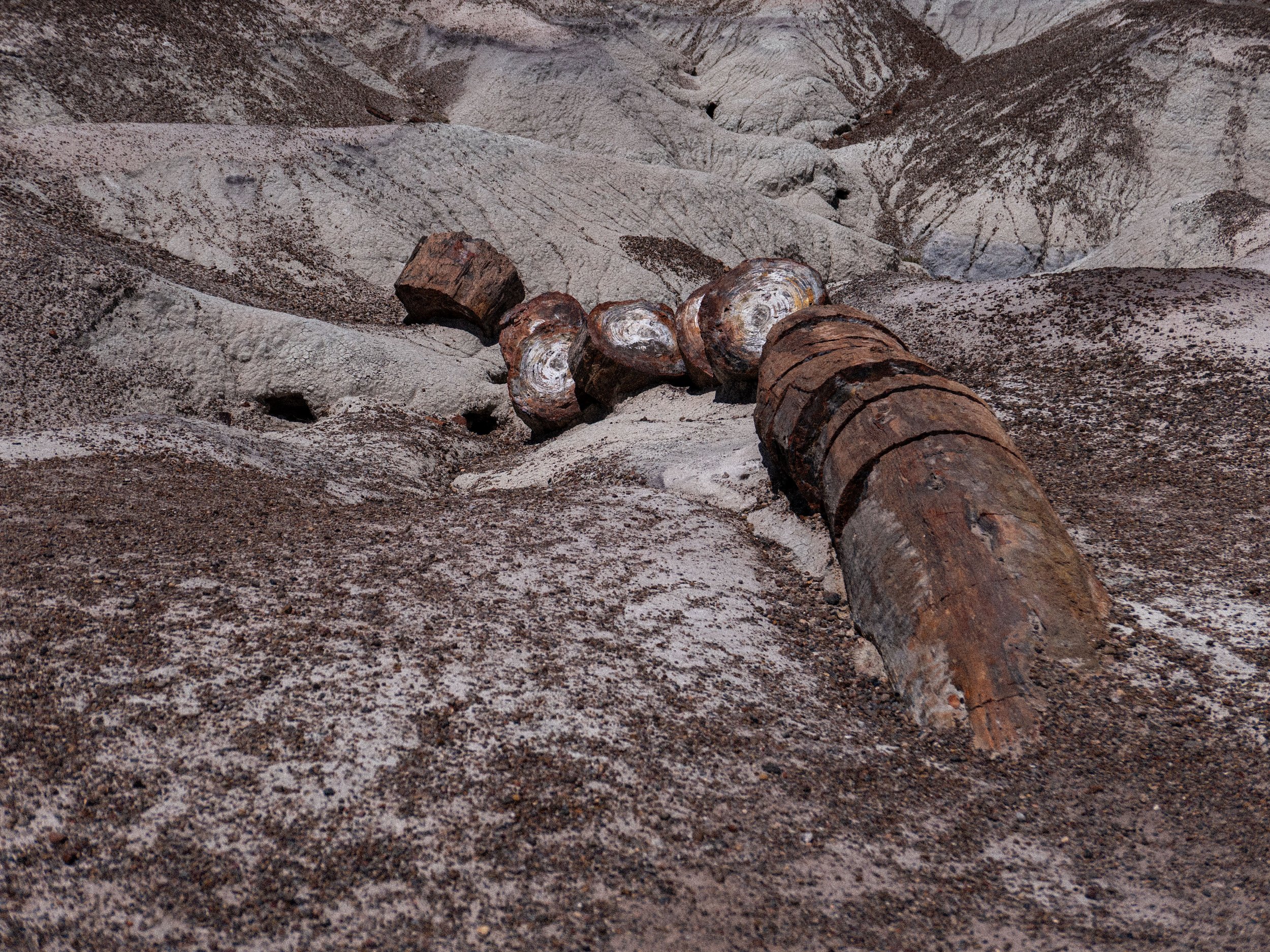
Halfway through the return ride, I stopped near one of the massive trunks and removed my helmet. The desert wind moved across the landscape with terrifying indifference. My shirt clung to my skin with dried sweat. My left arm pulsed with pain from the fracture. Somewhere in the distance a child laughed briefly before silence swallowed the sound again.
And standing there, surrounded by stone trees beneath a merciless Arizona sky, I suddenly felt something collapse inside me.
Not emotionally.
Structurally.
The road from New York.
The endless miles.
The loneliness.
The fatigue.
The ambition.
The uncertainty about art.
The fear of becoming irrelevant.
The fear of hardening emotionally just to survive America.
The fear of becoming efficient instead of alive.
All of it surfaced at once.
I realized I had not come to the Petrified Forest merely to see geological history.
I had come to measure my own condition against time.
And strangely, the second passage through the park no longer demanded answers.
The first ride asked:
What is happening to the world?
The second ride asked:
What is happening to me within the world?
That difference changed everything.
Perhaps maturity is not finding answers but learning how to remain beside unbearable questions without fleeing from them.
The desert offered no revelation.
No spiritual climax.
No cinematic enlightenment.
Only scale.
And scale changes consciousness.
Two hundred million years reduces ideology into weather. Empires into temporary arrangements of dust. Human certainty into nervous performance.
Even grief begins looking different beneath that kind of sky.
As I exited the park for the second time, evening light began softening the landscape. Shadows stretched longer across the desert floor. The fossilized trunks behind me slowly disappeared into distance.
But one question remained unresolved, vibrating quietly beneath everything I had seen:
What if survival and hardening are not opposites?
What if people, societies, even civilizations slowly petrify in order to endure history?
And if that is true, then another question emerges beneath it, far more terrifying:
How does one remain alive without becoming stone?
The motorcycle carried me westward toward Flagstaff as evening light slowly approached the desert.
Behind me, beneath Arizona’s ancient silence, the stone trees continued waiting.
Not dead.
Not alive either.
Waiting.